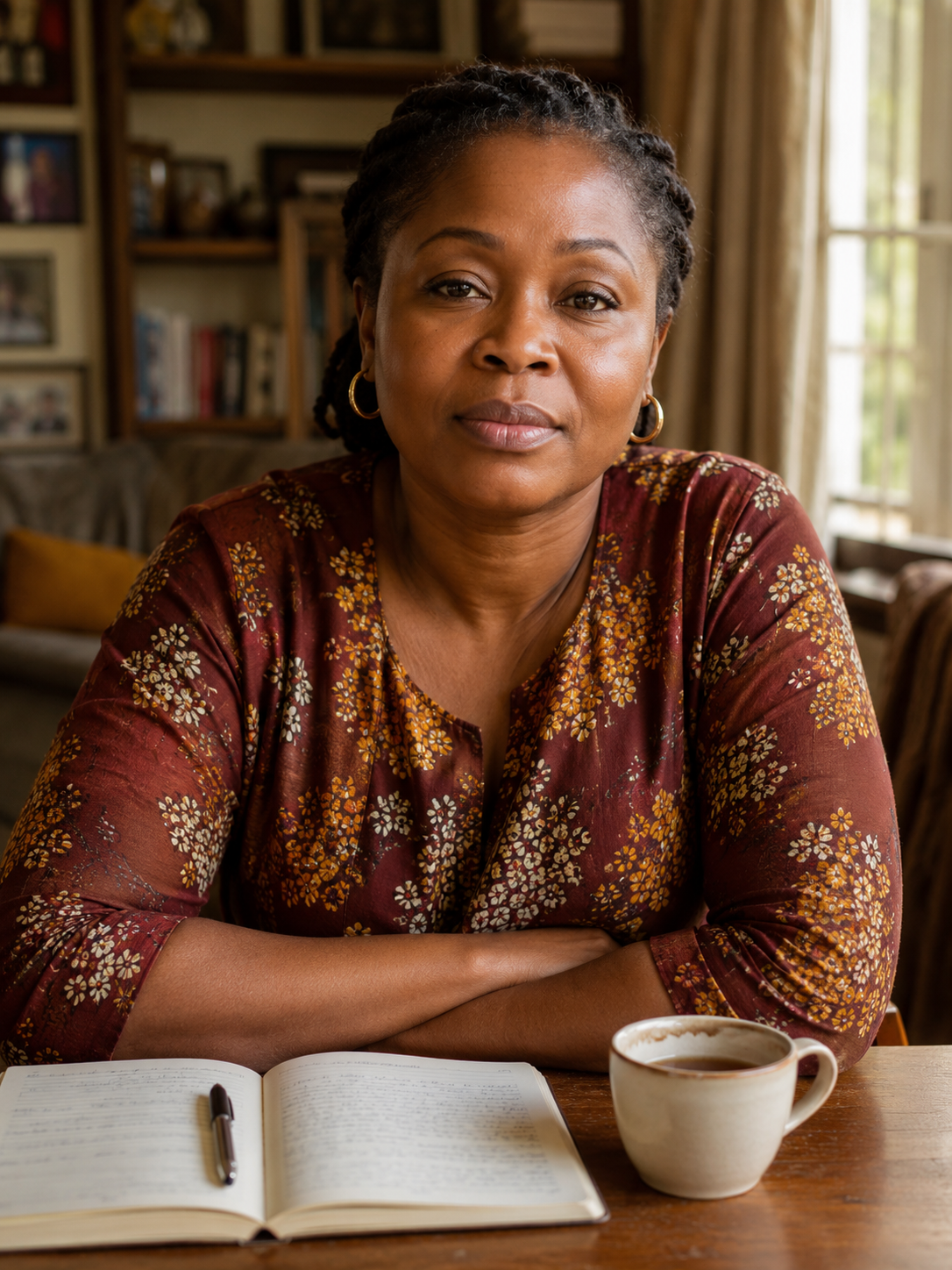
My name is Adaeze. I have been married for eleven years.
And for the last four of those eleven years, I was living in a marriage that looked completely intact from the outside and was quietly dying on the inside.
How It Started
Chidi and I met at a friend's wedding in Abuja in 2013. He was from Nnewi. I was from Owerri. We spent the entire reception talking. We dated for two years. He proposed at a family dinner in Enugu with both our parents present, the way it is done properly.
We got married in 2015. It was a beautiful wedding. Three hundred and forty guests. My mother cried. His father gave a speech that made the whole room go quiet.
For the first three years — genuinely, honestly, truly — it was everything I had hoped marriage would be.
Then the business problems started.
Chidi had his own logistics company. Three trucks. Eleven staff. When diesel prices jumped and two of his biggest clients moved to a competitor within the same month, the pressure became enormous. He started working longer hours. He stopped coming home for dinner. When he did come home, he went straight to his phone. The laughter that used to happen naturally between us — the teasing, the stupid inside jokes that nobody else would understand — all of it just... stopped.
I told myself it was temporary. That this was just stress. That the real Chidi was still in there, just buried under the weight of everything.
A year passed. Then another.
The Emotional Cost
By Year 7, I had stopped initiating conversation about anything that mattered. Not because I had nothing to say. Because every time I tried to open a real conversation, something closed in his face. A heaviness came over him. And I could see him calculating — how long is this going to take, how do I get through this as quickly as possible — and the calculation was written so clearly on his face that I began to feel like a burden every time I opened my mouth.
So I stopped. I managed the house, the children, the social calendar. I was a wife. I was a mother. I was a daughter-in-law who remembered everyone's birthday and sent the correct gifts at the correct times.
But I was also desperately, privately lonely.
My best friend Nkechi called me one evening and asked how I was doing. Not "how is everything" — how are you. And I tried to answer normally and I could not do it. I started crying in a way I had not cried since I was a child. And between the tears, what I said to her was:
"Nkechi, I am living with a stranger. The man I married is gone and I do not know how to bring him back. I do not even know if I can."
She went quiet for a long time. And then she said something I will never forget:
"Adaeze, a marriage that is not being tended to is a marriage that is dying. It is not dead yet. But it is dying. And only one of you needs to decide to do something about it."
Everything I Tried That Did Not Work
I tried. God knows I tried.
I tried the direct conversation. I sat him down one Saturday morning and I told him everything — calmly, carefully, without accusations. He listened. He said he understood. He said he would do better. And for two weeks, things were slightly warmer. Then it drifted back exactly to where it was before.
I tried the indirect approach. Cooking his favourite food. Wearing the dress he always said he loved. Being extra available. Initiating physical contact. He received all of these warmly enough. But the emotional distance remained completely unchanged.
I tried reading Western marriage books. I bought four of them. They were well-written. They made sense. But they were written for American couples with American problems in American circumstances. They did not understand what it meant to have his entire extended family's financial needs flowing through our household. They did not understand the specific dynamics of a Nigerian man who was taught from childhood that strength means silence.
I tried a marriage counsellor in Abuja. We went twice. Chidi sat in that office and gave answers that were technically correct and emotionally completely dishonest. He is a private man. Discussing the interior of our marriage with a stranger in a rented office was not something he was capable of doing. After the second session, he told me quietly that he would not go again. And I believed him.
I tried the prayer approach. I am a woman of faith. I believe in prayer. But I also came to understand — slowly, painfully — that God answers prayers, but He also expects us to use the tools He has put in front of us. Prayer without action in a struggling marriage is not faith. It is avoidance.
I tried ignoring it. Telling myself it was fine. That all long marriages go through this. That we just needed to wait it out. This strategy lasted about three months before the loneliness became unbearable again.
Nothing worked. Or rather — everything worked for a little while and then drifted back. Like pushing a door that has no hinge. You can push it open, but the moment you let go, it closes again.
The Encounter That Changed Everything
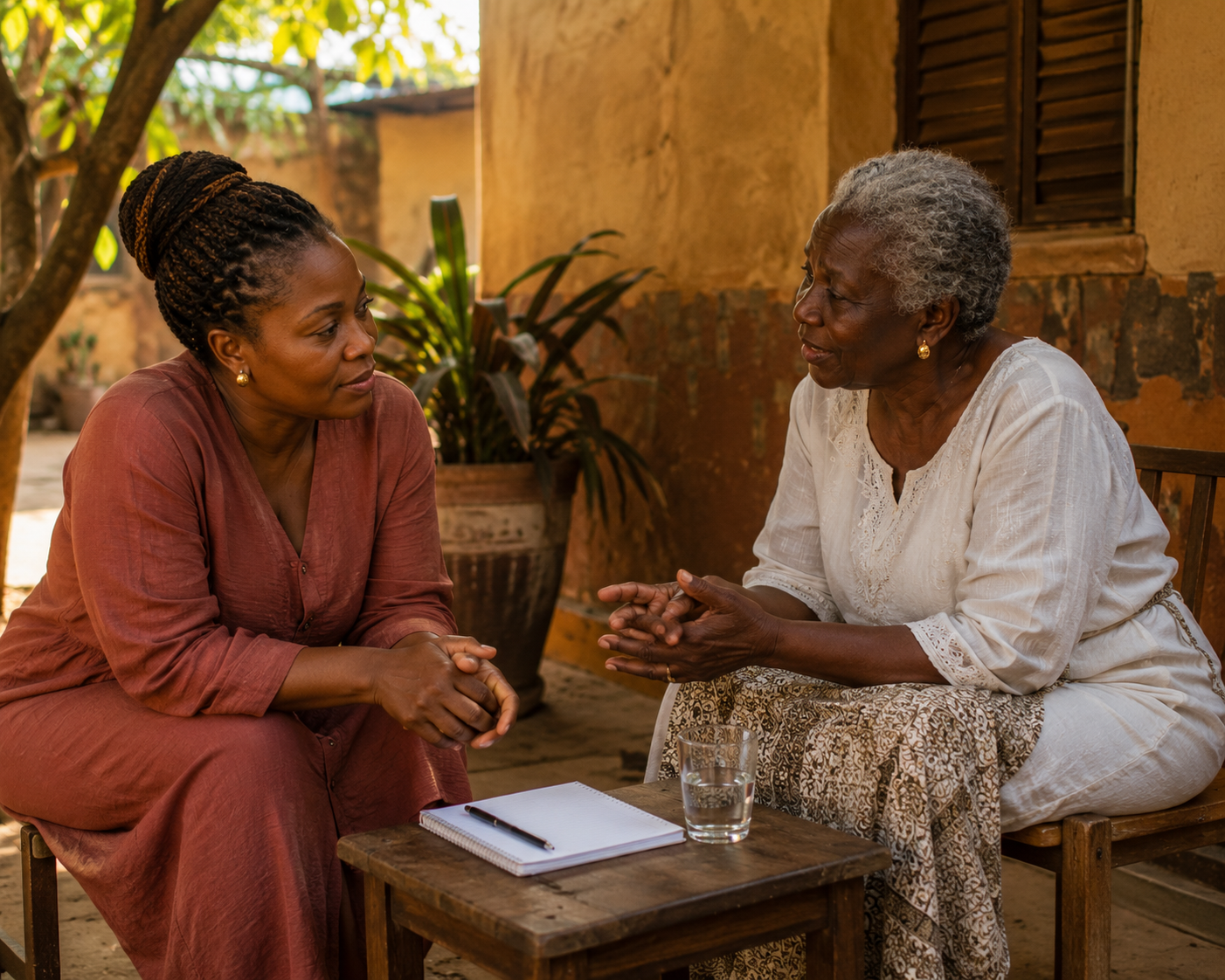
In October last year, I went to Enugu with my mother for a family thanksgiving ceremony. Her cousin — a 74-year-old retired family counsellor named Mama Obiageli — was there. She had spent 38 years working with Nigerian couples through a faith-based counselling centre in Enugu. Thousands of couples had passed through her hands.
I had met her once before, at a naming ceremony, years ago. She was tiny. Quick-eyed. The kind of woman who notices things about you before you have said a word.
She sat next to me at dinner. We talked about small things at first. Then she asked, quietly, without any preamble: "How is the marriage going?"
There was something about the way she asked it that made the careful answer I had prepared dissolve. I told her the truth. Not all of it. But enough.
She listened without interrupting. When I was done, she put her hand on mine and said:
"My daughter, what you are describing is not a broken marriage. It is a marriage that has been starved. The love is still there — it is simply buried under four years of small withdrawals that were never repaired. A marriage does not need a miracle. It needs a protocol. A specific, deliberate, private system of repair — done consistently for 30 days. I have watched this work in marriages that were far further gone than yours."
I looked at her. A protocol. It sounded almost too clinical. Too simple.
She saw the scepticism on my face and smiled. "You have tried the complicated approaches. The counsellors. The books. The conversations. You have spent four years trying the complicated approaches. What do you have to lose by trying the simple, consistent, private one?"
I had no answer to that.
She pulled a small notebook from her bag and spent the next hour writing. The seven silent patterns destroying the marriage. The three phases of repair. The 30 specific daily tools. The things Nigerian couples do wrong when they try to fix their marriages. The things that actually work.
What Happened Next
I started the protocol alone. Without telling Chidi. Without announcing anything or creating any expectations.
The first week — I noticed nothing dramatic. But I slept slightly better. I felt slightly less desperate. Not because the marriage had changed, but because I had direction. I was doing something specific instead of just enduring.
Day 11: I came home to find Chidi had cooked. Not a big meal — rice and stew from the leftovers. But he had cooked. And set the table. And he looked at me with something in his face that I had not seen in years.
Day 18: He reached for my hand during a car journey without any reason or prompting. Just reached over and held it. I looked out the window so he could not see my face.
Day 23: He asked me, over breakfast, how I was really doing. Not practically. Really. And when I answered — honestly, for the first time in years — he did not deflect. He listened. He said: "I am sorry. I know I have not been present. I am going to try to be different."
I had waited four years to hear that sentence.
Day 30: We sat on the veranda after the children were asleep. We talked for two and a half hours. Not about logistics. About us. About who we had been, and who we had become, and who we still wanted to be to each other. He told me things about his fear during the business crisis that he had never said. I told him things about my loneliness that I had carried alone for years.
My sister called the next morning. She had not spoken to me in a few weeks. After two minutes of conversation, she stopped and said: "Adaeze, something is different about your voice. What has happened?"
❤️
I shared what I had been doing with two other women in my church circle who I knew were quietly carrying similar things. Both of them followed the protocol. Both of them came back to me — weeks later — with stories that made me cry.
Chioma — 39, married for 8 years, from Awka: "By Day 14 my husband started coming home for dinner without me asking. I had not had dinner with him on a weekday in over a year."
Blessing — 45, married for 14 years, from Port Harcourt: "He said sorry for something from four years ago that I had stopped expecting he would ever acknowledge. I had given that apology up completely. And then one Tuesday morning he just said it. Out of nowhere."
That was when I knew I could not keep this to myself any longer.
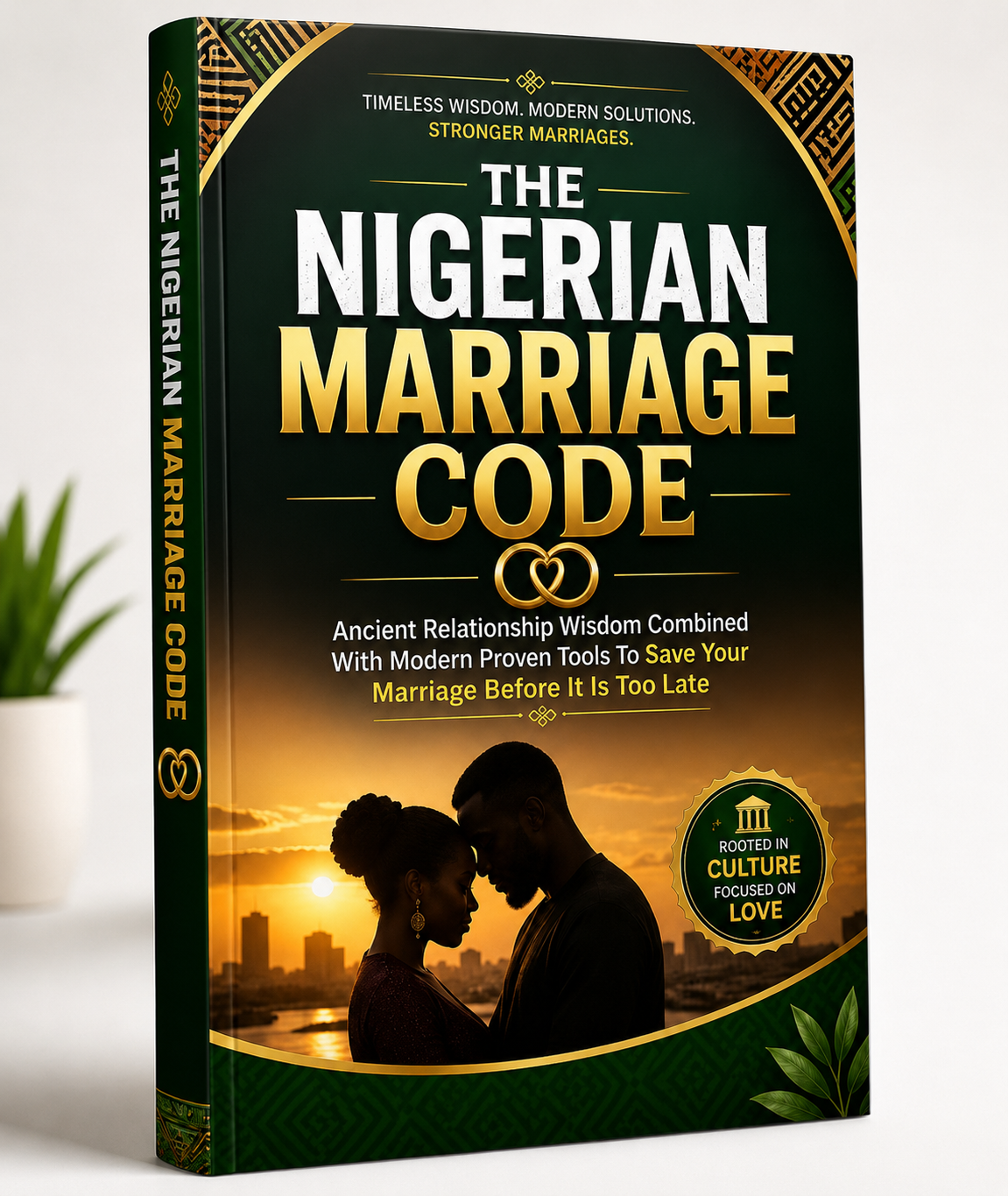
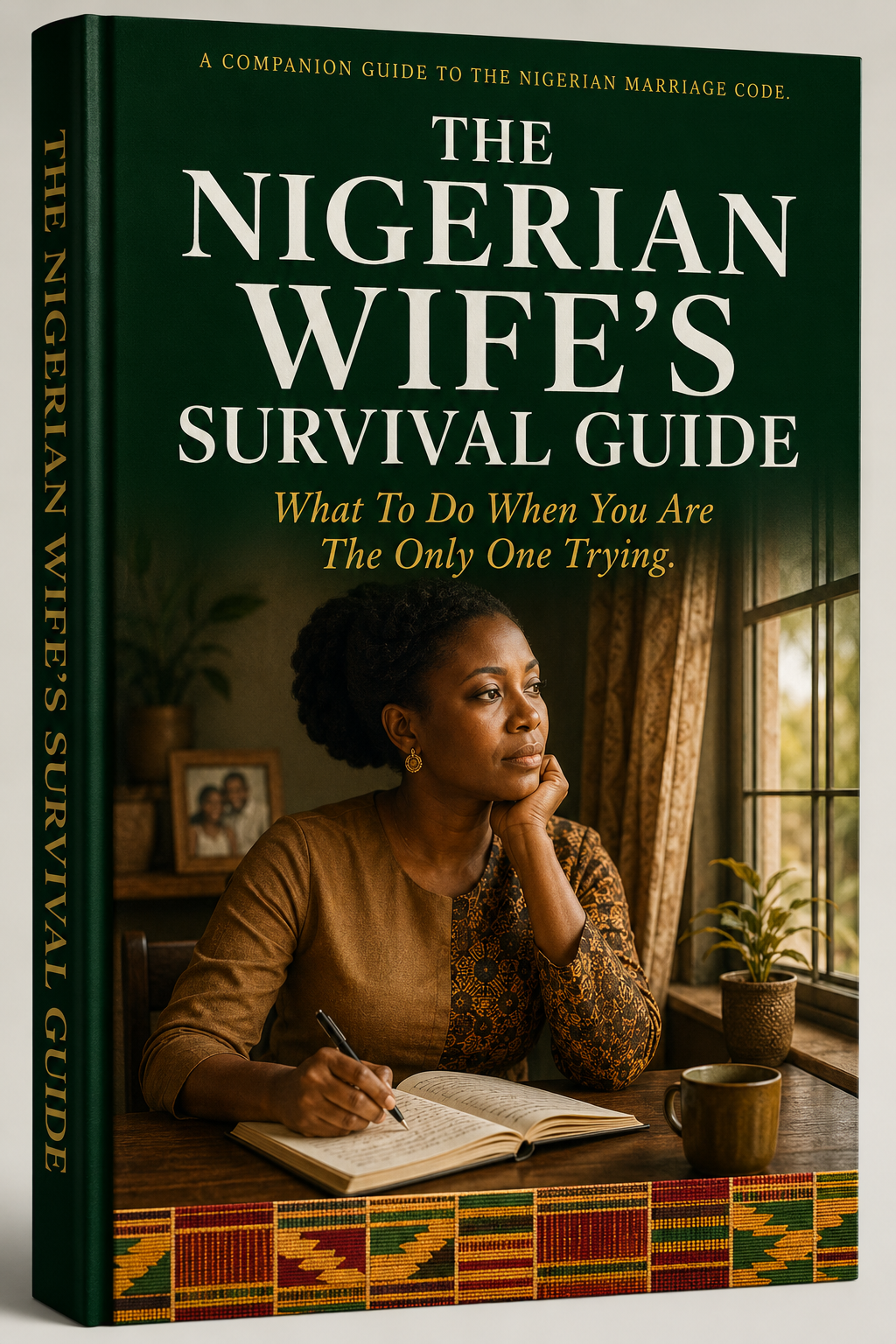
Introducing...
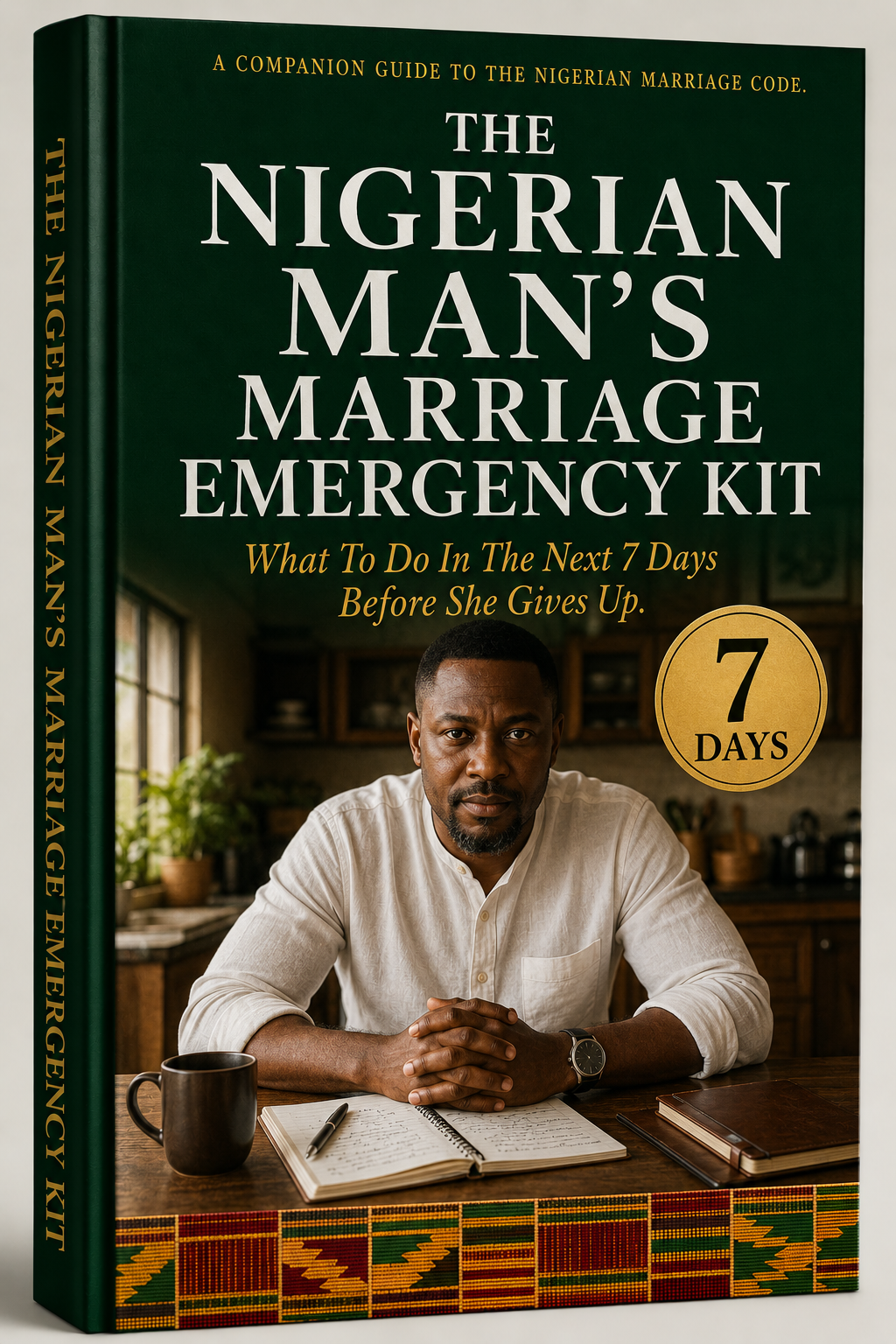
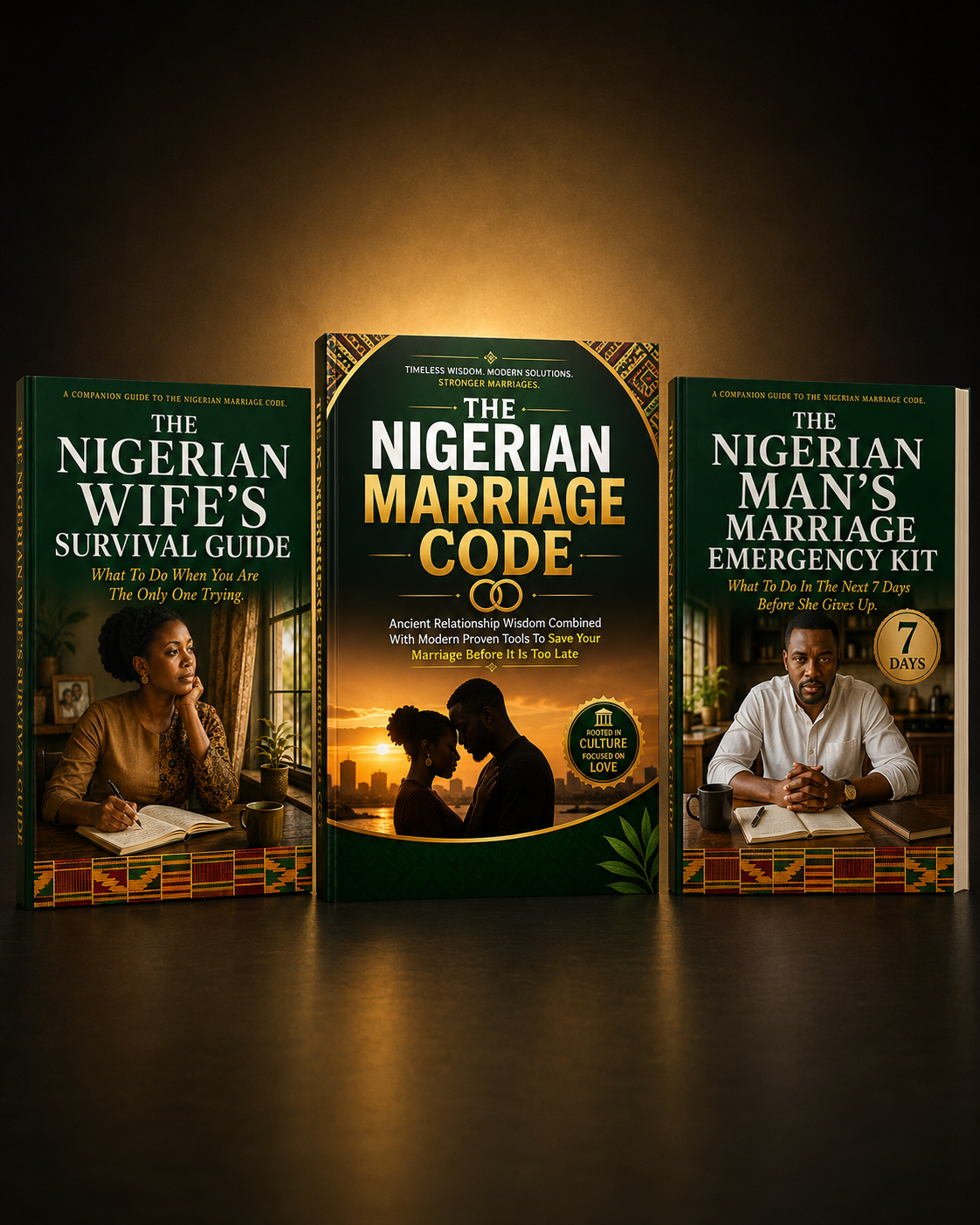
I bought this because my wife bought it and I saw her reading it. I was skeptical. After 9 years of marriage we had basically stopped communicating beyond logistics. By Day 20 I noticed something had shifted — I started wanting to come home. Not just physically but emotionally. I cannot fully explain it. My wife said last week: "You are back." That is all I needed to hear. This protocol works.
I read this alone while my husband was abroad. He does not know I bought it. By Day 15 he started calling differently — longer, warmer, asking questions he had not asked in years. By Day 30 he booked a flight home earlier than planned. He said he missed home. In twelve years of marriage he had never cut a trip short. I am crying writing this. Buy it. Please.
I am a man. I bought this for myself. My wife had been carrying our marriage for years and I could see it but I did not know what to do about it. This gave me the exact steps — daily, practical, specific. Not theory. The apology framework in Chapter 6 alone is worth ten times what this costs. My wife said last week that she feels like I am the man she married again. Nothing else matters.
What I love most is that it understands Nigerian marriage specifically. My husband's family involvement, the financial pressure, the things we were never taught about how to communicate properly. Other books I tried were for oyinbo couples. This one knew exactly where I was standing. My husband and I read it together in the end and we are in a completely different place. Alhamdulillah.
My husband is in Nigeria. I am in London. We were barely speaking beyond school fees and bill payments. I found this and read it in two days. The long-distance section, the in-law chapter, the communication reset — all of it written as if someone was sitting in my living room watching my marriage. 30 days later he applied for a spouse visa. We had not discussed that in years. God is involved in this.